5 min read

Fire Rated Glass Floor Specifications: The Architect's Complete IBC Compliance Guide

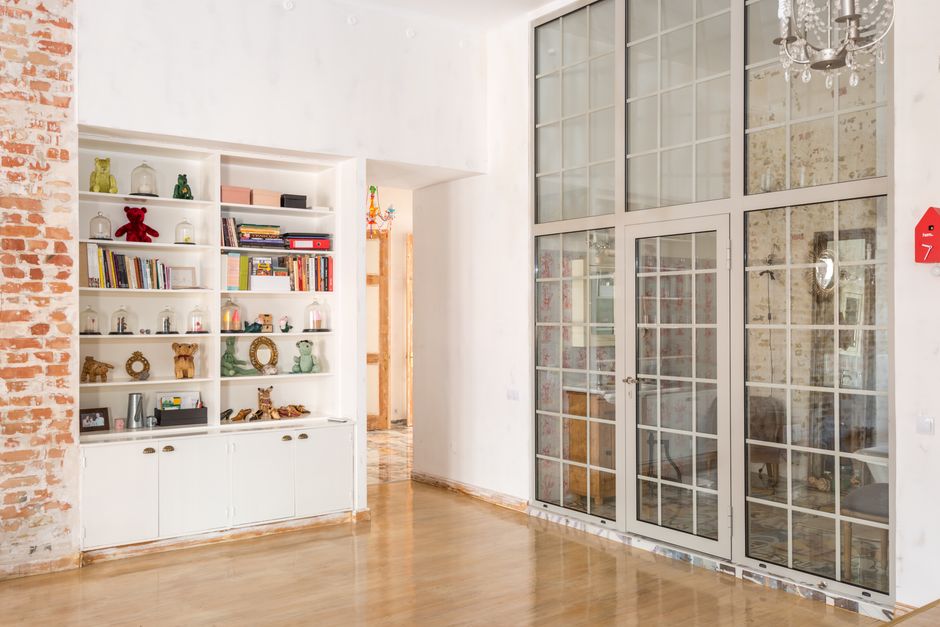
a large room with a glass ceiling
Liteflam Team
This is some text inside of a div block.
April 6, 2026
This is some text inside of a div block.

Why Fire Rated Glass Floor Specifications Fail Plan Review

When a project stalls at plan review, incomplete or vague fire rated glass floor specifications are almost always the culprit. Reviewers are not looking for intent — they are looking for exact code citations, tested assembly descriptions, and documentation trails that leave zero room for interpretation. A specification that says "fire-rated glazing per code" is not a specification. It is a liability. This guide walks architects, specifiers, and project engineers through the precise language, code sections, and ASTM standards required to document a compliant walkable glass floor assembly for commercial construction in North America.

The IBC Framework: What Sections Actually Apply

Understanding IBC fire rated glazing requirements begins with knowing which sections of the International Building Code govern floor assemblies versus vertical glazing. Most specifiers default to IBC Section 716, which addresses opening protectives and fire-rated glazing in walls and partitions. That section is only partially relevant to floor applications.

For glass floor systems used as fire-rated horizontal assemblies, the controlling code sections include:

  • IBC Section 711 — Horizontal assemblies, including floor and roof assemblies required to be fire-resistance rated. This section establishes that horizontal assemblies separating stories must achieve fire-resistance ratings through tested assemblies listed in accordance with ASTM E119 or UL 263.
  • IBC Section 716.5 — Fire-protection-rated glazing in fire door assemblies, which can apply when glass floor panels are incorporated into floor-level opening protectives adjacent to stairwells or egress corridors.
  • IBC Section 202 — Definitions. Specifiers must confirm whether the assembly qualifies as a "fire barrier," "fire partition," or "horizontal assembly" under IBC definitions, as the rating requirement changes accordingly.
  • IBC Table 601 and Table 602 — Construction type requirements that dictate minimum fire-resistance ratings for floor assemblies based on occupancy and building height. Your specification must reference the applicable table row explicitly.

Reviewers cross-reference these sections. If your specification cites only Section 716 without addressing Section 711, expect a correction notice.

ASTM Standards Every Specifier Must Reference

No fire rated floor assembly spec is complete without explicit ASTM standard citations. For walkable glass floor code compliance, the following standards form the non-negotiable foundation of your documentation package:

  • ASTM E119 — Standard Test Methods for Fire Tests of Building Construction and Materials. This is the baseline standard for fire-resistance ratings on horizontal assemblies. Your spec must state the required rating duration (typically 1-hour or 2-hour) and confirm the listed assembly has been tested under E119 conditions.
  • ASTM E2010 — Standard Test Method for Positive Pressure Fire Tests of Window Assemblies. Relevant when glass floor panels adjoin pressurized stairwell enclosures.
  • ASTM C1048 — Standard Specification for Heat-Strengthened and Fully Tempered Flat Glass. Governs the base glass unit specification within the assembly.
  • ASTM C1172 — Standard Specification for Laminated Architectural Flat Glass. Required when specifying the laminated interlayer composition that provides post-breakage integrity in walkable applications.
  • ASTM E1300 — Standard Practice for Determining Load Resistance of Glass in Buildings. Directly governs glass floor load capacity standards and must be cited with the specific design load parameters (live load, dead load, point load, and dynamic load).

Each ASTM standard citation in your specification should include the current edition year. Using an outdated edition is another common cause of plan review corrections.

Assembly-Level Specification Language: The Checklist

Referencing the correct code sections and standards is necessary but not sufficient. The specification must also describe the tested assembly in enough detail that a contractor, inspector, and plan reviewer can confirm what is being installed matches what was listed and approved. Use the following checklist as your fire rated floor assembly specs framework:

  1. UL or ITS Listing Number: Cite the exact listed assembly number (e.g., UL Design No. P-XXXX). Do not paraphrase. Copy the listing number verbatim and specify that substitutions require re-evaluation by the Authority Having Jurisdiction (AHJ).
  2. Glass Unit Composition: Specify glass type (tempered, heat-strengthened, or laminated), thickness of each lite, interlayer material and thickness, and total unit thickness. For walkable assemblies, laminated construction with a minimum two-lite configuration is standard practice.
  3. Framing System: Identify the structural framing material (steel, aluminum thermal break, or proprietary structural glass fin system), connection method to the primary structure, and fire-resistive protection applied to the framing members. The frame is part of the listed assembly — it cannot be substituted independently.
  4. Intumescent Seals and Perimeter Detailing: Specify the intumescent material at all perimeter joints and confirm compatibility with the listed assembly. State the required compression ratio and minimum coverage width.
  5. Surface Treatment and Slip Resistance: For walkable glass floor code compliance, cite the required static coefficient of friction (SCOF) per ANSI A137.1 or ADA Section 4.5. Specify the frit pattern, sandblast texture, or applied anti-slip coating and confirm it does not void the fire-resistance listing.
  6. Structural Design Loads: Per ASTM E1300, document uniform live load (minimum 100 psf for public assembly per IBC Table 1607.1), concentrated load (300 lb over a 4-inch square area minimum), and any project-specific dynamic loads. State the glass deflection limit (typically L/175 or 3/4 inch maximum, whichever is less).

Explore how these specification requirements are executed across completed commercial projects at LITEFLAM's project portfolio.

Coordination With the Structural Engineer of Record

Glass floor specifications do not live in Division 08 alone. A complete documentation package requires formal coordination with the Structural Engineer of Record (SER) on several critical items. The SER must confirm that the primary structure supporting the glass floor frame can accommodate the transferred loads without exceeding deflection limits that would compromise the fire-rated assembly's integrity under both service and fire conditions. Any deflection in the supporting structure that exceeds the tested assembly's tolerance can invalidate the listing.

Specifiers should include a coordination note in the specification requiring the SER to review the glass manufacturer's engineering report and sign off on the connection design before submittal. This creates a clear documentation trail and protects all parties if the AHJ raises structural questions during review.

Submittal Requirements That Prevent RFIs

A well-written specification also defines exactly what the contractor must submit before installation begins. Incomplete submittals generate RFIs that delay schedules and erode confidence in the specification. Require the following as a minimum submittal package for any fire rated glass floor assembly:

  • Complete UL or ITS listing documentation for the proposed assembly
  • Manufacturer's product data sheets for glass units, framing, intumescent materials, and anti-slip treatment
  • Third-party engineering report confirming compliance with ASTM E1300 load requirements for the project-specific span and load conditions
  • Shop drawings stamped by a licensed engineer showing all connection details, perimeter conditions, and expansion joint locations
  • Slip resistance test report from an accredited laboratory confirming SCOF values meet or exceed specification requirements
  • Written confirmation from the manufacturer that the proposed installation matches the listed assembly configuration without deviation

Review the full range of tested and listed systems available for commercial specification at LITEFLAM's systems page.

Common Specification Errors That Trigger AHJ Rejection

Even experienced specifiers make errors that add weeks to a project timeline. The most frequent causes of plan review rejection on fire rated glass floor assemblies include specifying fire-protection-rated glazing (which resists flame and smoke transmission only) when a fire-resistance-rated assembly (which must also resist heat transfer to maintain structural integrity) is required by the occupancy and construction type. These are not interchangeable. A 45-minute fire-protection rating does not satisfy a 1-hour fire-resistance requirement. Confirm with IBC Table 601 before specifying.

Fire-protection-rated and fire-resistance-rated are distinct classifications under IBC. Using the wrong term in a specification is not a minor error — it can require complete redesign of the assembly.

Other common errors include omitting the framing system from the listed assembly description, specifying an anti-slip treatment not evaluated as part of the fire test, and failing to address through-penetrations (conduit, drainage, sensors) that must maintain the assembly's fire-resistance rating under IBC Section 714.

Specify With Confidence on Your Next Project

Writing fire rated glass floor specifications that survive plan review requires more than good intentions — it requires exact language, verified listings, coordinated engineering, and a submittal process that closes every documentation gap before the AHJ opens the file. LITEFLAM's technical team works directly with architects and specifiers throughout North America to develop project-specific specification language, provide listing documentation, and support plan review responses at no charge. Contact LITEFLAM today to request a specification consultation, download our master spec section, or connect with a regional technical representative who can support your project from schematic design through certificate of occupancy.

Subscribe to our newsletter

Stay updated on the latest glazing innovations, solutions, and project highlights delivered to your inbox!

By subscribing you agree to with our Privacy Policy.
Thank you! Your submission has been received!
Oops! Something went wrong while submitting the form.